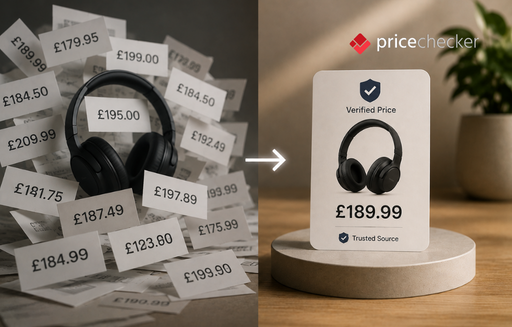
For many retailers, competitor pricing starts with collection.
A price monitoring tool gathers prices from across the market, feeding into dashboards and reports that support day-to-day decisions. On the surface, this creates the impression of a complete and reliable view.
But there is an important distinction that tends to get overlooked:
Collecting prices is not the same as verifying them.
At enterprise scale, that difference becomes increasingly significant.
What Basic Price Collection Delivers
Most forms of competitor tracking begin with data capture.
Prices are extracted from product pages, structured, and made available for analysis. This approach works reasonably well in stable environments where product pages are consistent and pricing is clearly presented.
It provides coverage and speed, which are often seen as the primary requirements of a competitive intelligence tool.
However, collection alone does not account for how that data might vary once captured.
Where Collection Falls Short
Modern retail websites introduce a range of variables that affect how prices are displayed.
Layouts change. Pages are rendered dynamically. Prices may differ based on location, device, or user behaviour. Promotions can be layered in ways that are not immediately visible.
In this context, simple data capture can lead to inconsistencies.
A price may be collected successfully, but still be:
- Incomplete
- Context-dependent
- No longer valid by the time it is used
Without validation, these issues are difficult to detect.
Over time, they introduce drift into competitor pricing analysis, where the data gradually becomes less aligned with the real market.
What Verification Adds
Verification introduces a layer of control.
Rather than assuming that captured data is correct, a validated approach checks that prices are consistent, comparable, and representative of what customers actually see.
This typically involves:
- Confirming that products are matched like-for-like
- Accounting for dynamic page behaviour
- Identifying anomalies or unexpected changes
- Ensuring pricing reflects a consistent context
For enterprise retailers, this turns a basic price tracking software into something more dependable.
The Impact on Pricing Decisions
The difference between collected and verified data becomes clear in how it affects decisions.
With unverified data, pricing teams may find themselves reacting to signals that are incomplete or misleading. This can lead to unnecessary adjustments, missed opportunities, or inconsistent positioning.
With verified data, the picture is more stable.
Teams can rely on outputs from their competitor monitoring software, knowing that the underlying comparisons have been checked and validated. This supports more confident decision-making and reduces the need for manual intervention.
Reducing Data Drift Over Time
One of the less obvious challenges in pricing data is drift.
Even if data is accurate at the point of collection, small inconsistencies can accumulate over time. Changes in website structure, product listings, or data feeds can gradually reduce accuracy without being immediately visible.
Verification helps to manage this.
By continuously checking and refining data, it ensures that competitor intelligence remains aligned with the current state of the market, rather than reflecting outdated or partial information.
From Coverage to Confidence
Basic collection prioritises coverage, including how many products, how many competitors, how often data is captured.
Verification shifts the focus to confidence.
It recognises that not all data points carry the same weight, and that accuracy is more valuable than volume when it comes to pricing decisions.
A competitive pricing tool built on verified data allows teams to spend less time questioning outputs and more time acting on them.
Final Thought
Collecting prices is an essential first step, but it is only part of the process.
Without validation, pricing data can appear complete while still containing gaps, inconsistencies, or inaccuracies that affect decision-making.
For enterprise retailers, the distinction matters.
Because in the end, it is not the amount of data that drives better pricing. It is the ability to trust it.