pricechecker

For a long time, competitor price monitoring has focused almost entirely on the web.

Retailers deploy a price monitoring tool or competitor monitoring software, capture prices from product pages, and build their view of the market from there. For many categories, that still forms the backbone of competitor pricing analysis.

The difficulty is that an increasing share of pricing activity no longer sits on the open web.

It sits inside apps.

The Shift Towards App-Led Pricing

Retailer apps are no longer just an alternative shopping channel. In many cases, they are where the most competitive pricing and promotions are surfaced.

This includes:

  • App-exclusive discounts
  • Personalised offers
  • Time-limited promotions
  • Loyalty-driven pricing

From a customer’s perspective, this is often where the best value is found.

From a competitor tracking perspective, it introduces a gap.

If pricing intelligence is based only on web data, part of the market is simply not being observed.

What Web-Only Monitoring Misses

Web pricing still provides a useful baseline, but it does not always reflect what customers actually pay.

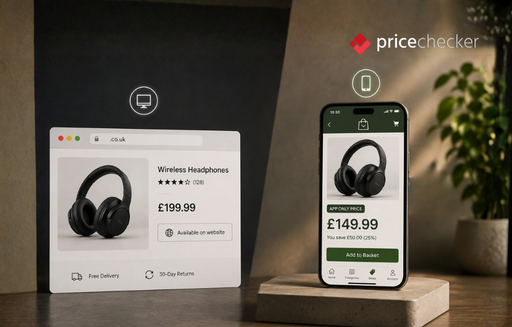
App environments can present different prices for the same product, influenced by factors such as user behaviour, account status, or promotional campaigns.

As a result, a retailer relying solely on web-based competitor intelligence may believe it is competitively positioned, while in reality competitors are offering lower prices within their apps.

This creates a form of hidden competition that is not immediately visible through traditional price tracking software.

The Impact on Pricing Decisions

When app-only pricing is not captured, decisions are made on an incomplete view of the market.

This can lead to:

  • Overestimating price competitiveness
  • Missing targeted promotions from key competitors
  • Reacting too late to sustained pricing shifts

At an enterprise level, these gaps can affect both margin and positioning.

What appears to be a stable pricing strategy may, in practice, be out of step with how customers are actually experiencing the market.

Why App Data Is Harder to Capture

Unlike web pages, app environments are more controlled.

Content is often delivered through APIs, user sessions, and personalised logic. Prices may only be visible after login, and offers can vary between users.

This makes app-based data more difficult to access using traditional approaches.

Many competitive intelligence tools were designed around web scraping, where content is publicly accessible and relatively consistent. Extending this to app environments requires a different approach that can handle variability, authentication, and dynamic pricing.

Closing the Visibility Gap

To build a more complete view of the market, pricing intelligence needs to extend beyond the web.

This does not mean replacing existing competitor monitoring processes, but enhancing them.

By incorporating app-level data, retailers can:

  • See where competitors are offering deeper discounts
  • Understand how promotions are structured across channels
  • Identify gaps between web pricing and app pricing

This creates a more accurate picture of true competitive position.

From Partial View to Market Reality

One of the risks with web-only monitoring is that it provides a clean, but incomplete, view.

Data appears structured and consistent, but it may not reflect the full range of pricing activity taking place.

Including app data introduces complexity, but it also brings the dataset closer to reality.

A competitive pricing tool that accounts for both web and app environments is better positioned to support meaningful decisions, particularly in categories where mobile commerce is a significant share of sales.

Final Thought

Competitive intelligence has traditionally been built around what is visible on the web.

That is no longer the full picture.

As more pricing and promotional activity moves into apps, relying solely on web data creates blind spots. For enterprise retailers, those blind spots can influence both pricing decisions and overall market positioning.

Expanding visibility to include app-only pricing is not just an enhancement. It is increasingly a requirement for understanding how the market truly behaves.

Don't want to miss anything?

Grow your business with the latest eCommerce updates

This field is for validation purposes and should be left unchanged.