pricechecker

For many retailers, competitor promotion tracking starts—and ends—on the product page.

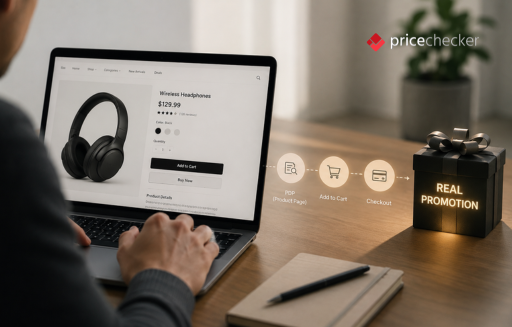
A price monitoring tool captures the PDP (product detail page) price, flags any visible discount, and feeds it into competitor monitoring software. On the surface, this creates a clean and structured view of the market.

The problem is that some of the most commercially significant promotions never appear there.

They appear later—at checkout, in the basket, or only once certain conditions are met.

The Limits of PDP-Based Tracking

PDP pricing provides a useful baseline.

It shows the standard price, any obvious discount, and how products are positioned at first glance. For straightforward promotions, this can be enough.

But modern retail promotions are rarely that simple.

Many are designed to trigger further down the journey:

  • Spend thresholds applied in-cart
  • Basket-level discounts across multiple products
  • Voucher codes entered at checkout
  • Conditional offers based on delivery or fulfilment options

From a competitor tracking perspective, these are often invisible if monitoring stops at the PDP.

When the Real Price Appears Later

From a shopper’s point of view, the price that matters is the one paid at checkout.

That is where promotions are fully applied.

A product may appear full price on the PDP, but effectively discounted once added to basket. Alternatively, a visible PDP discount may be enhanced further through a multi-buy or threshold offer.

Without capturing this behaviour, competitor pricing analysis can misrepresent how competitive an offer actually is.

How This Leads to Misleading Signals

When pricing systems rely solely on PDP data, they risk drawing the wrong conclusions.

For example:

  • A competitor appears more expensive at PDP level
  • No pricing action is taken
  • In reality, checkout promotions make them more competitive

Or:

  • A PDP discount is detected and matched
  • Additional in-cart discounts are missed
  • The competitor remains cheaper in practice

These gaps can lead to:

  • Missed competitive threats
  • Over- or under-reaction to promotions
  • Misaligned pricing decisions

Why Checkout-Level Promotions Are Harder to Capture

Checkout and basket-level pricing introduces complexity.

Unlike PDP data, it often requires:

  • Simulating realistic purchase journeys
  • Meeting promotion conditions (e.g. basket size)
  • Handling dynamic or personalised offers

Many competitive intelligence tools are built primarily around page-level capture, where data is more readily accessible.

Extending this to in-cart and checkout scenarios requires a more structured approach.

Bringing Full Journey Visibility Into Pricing

To reflect real market conditions, promotion tracking needs to go beyond the PDP.

A more complete competitive pricing tool will:

  • Capture pricing at different stages of the purchase journey
  • Interpret how promotions apply in practice
  • Estimate effective prices under realistic scenarios

This creates a clearer picture of how competitors are actually trading, rather than how they appear at first glance.

Supporting Better Pricing Decisions

When checkout-level promotions are visible, pricing decisions become more accurate.

Teams can:

  • Identify where competitors are genuinely more competitive
  • Respond appropriately to full promotional value
  • Avoid reacting to incomplete or misleading signals

Reliable competitor intelligence ensures that both PDP and checkout data are interpreted consistently.

From Surface Pricing to Real Pricing

There is a difference between visible pricing and effective pricing.

PDP prices are what shoppers see first. Checkout prices are what they pay.

For enterprise retailers, understanding that difference is essential.

A price tracking software that only captures surface-level data risks missing the true competitive picture.

Final Thought

Promotion tracking that stops at the PDP tells only part of the story.

In many cases, the most meaningful discounts are applied later in the journey—quietly shaping how competitive an offer really is.

For enterprise retailers, extending visibility into basket and checkout pricing is what closes that gap.

Because in the end, it is not the displayed price that matters most—it is the price the shopper actually pays.

Don't want to miss anything?

Grow your business with the latest eCommerce updates

This field is for validation purposes and should be left unchanged.