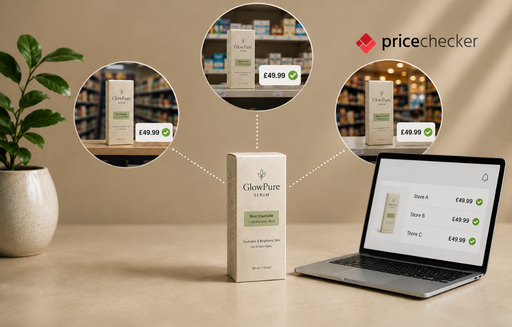
For brands selling through multiple retail partners, pricing compliance is a familiar challenge.
There is a need to protect brand value, maintain consistent positioning, and ensure agreed pricing structures are broadly followed. At the same time, retailers operate independently. They manage their own promotions, stock positions, and commercial priorities.
Balancing those two realities is not straightforward.
Most brands have some form of competitor monitoring software or price monitoring tool in place to track how products are priced across the market. The difficulty is less about visibility, and more about how that visibility is used.
Because overly aggressive enforcement can strain relationships just as quickly as a lack of oversight can weaken brand positioning.
Moving Away from Enforcement-Led Approaches
Traditionally, pricing compliance has leaned towards enforcement.
When a deviation is identified, whether below a recommended price or outside agreed parameters, the response is often immediate. Retailers are contacted, issues are escalated, and pressure is applied to bring pricing back in line.
While this can work in the short term, it does not always scale well.
Retailers may respond to pressure tactically rather than strategically, adjusting prices temporarily without addressing underlying behaviour. Over time, repeated intervention can create friction, particularly with key partners.
For brands operating across multiple markets and channels, this approach can become difficult to sustain.
The Case for Visibility First
A more sustainable approach starts with visibility.
Using a competitive intelligence tool or competitor tracking capability, brands can build a clear, consistent view of how their products are priced across retailers. The emphasis is on understanding patterns rather than reacting to isolated events.
This includes:
- Identifying which retailers consistently deviate from pricing guidelines
- Understanding how often and how long deviations occur
- Distinguishing between short-term promotions and sustained pricing changes
With this level of insight, pricing compliance becomes less about individual incidents and more about overall behaviour.
Context Matters in Pricing Compliance
Not all pricing deviations are equal.
A retailer discounting briefly to clear excess stock is operating under a different set of pressures than one consistently undercutting the market. Treating both scenarios in the same way can lead to unnecessary tension.
Accurate data from price tracking software allows brands to add context to what they are seeing.
Rather than responding to a single data point, brands can assess:
- The duration of a price change
- The scale of the deviation
- How it compares to other retailers
- Whether the product comparison is genuinely like-for-like
This creates a more balanced view, supporting measured responses rather than immediate escalation.
Supporting Stronger Retailer Relationships
When compliance is approached through visibility rather than policing, conversations with retailers tend to shift.
Instead of focusing on isolated breaches, discussions can be grounded in shared data. Brands can highlight trends, provide context, and work with retailers to understand the underlying drivers of pricing decisions.
This often leads to more constructive outcomes.
Retailers are more likely to engage when they feel the conversation is based on clear, consistent information rather than one-off observations from a competitor monitoring system.
Over time, this can strengthen relationships rather than weaken them.
The Role of Data Accuracy
As with other areas of pricing, the effectiveness of this approach depends on the quality of the data.
If a competitive pricing tool is surfacing incorrect product matches or inconsistent pricing signals, it becomes difficult to have credible conversations with retailers.
False positives, where a retailer appears non-compliant due to inaccurate data, can quickly undermine trust.
Accurate, verified comparisons are essential. They ensure that when an issue is raised, it is based on a genuine like-for-like observation, supported by reliable competitor pricing analysis.
From Monitoring to Governance
Over time, consistent visibility supports a more structured approach to pricing governance.
Brands can define clear thresholds for what constitutes a meaningful deviation and prioritise their response accordingly. This reduces the need for constant intervention while maintaining oversight.
A well-configured price monitoring tool allows brands to:
- Focus on material, sustained pricing issues
- Track compliance trends across retailers and regions
- Support internal reporting and decision-making
This turns pricing compliance from a reactive process into a managed, data-led function.
Final Thought
Pricing compliance is often seen as a balancing act between control and flexibility.
Too little oversight, and brand value can erode. Too much pressure, and retailer relationships can suffer.
A visibility-led approach offers a more measured path.
By relying on accurate data from competitor monitoring software and focusing on patterns rather than isolated events, brands can protect their position in the market while maintaining constructive, long-term relationships with their retail partners.
In most cases, that balance is what makes pricing compliance sustainable at scale.